

(review)
Reading the title of this book, you probably think that it does not deserve your time to read it. Yet, even if it is a short book about tea, the book’s content is much more than tea.
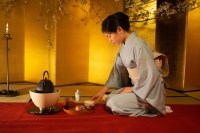
Written both poetically and philosophically, the book offers a detailed description of the tea ceremony and the room where it takes place to create an atmosphere of harmony, which is the core of the tea ceremony.
Only the one who lived in beauty can die beautifully.
The book also includes tea history in Japan and its influence on Japanese culture, especially Japanese cuisine, art, literature, and clothing.
Reading the book, the reader can also find myths and legends, information on Buddhism, Taoism, Confucianism, poetry, and the author’s explanations of his culture to Westerners to dissipate misunderstandings not just about the East, but also about Japan, in particular.
“Money! We ravage nature for it and boast that we have conquered Matter, not realizing that Matter has enslaved us. How many atrocities we commit in the name of civilization and refinement!
It is a short and easy-to-read book that makes you realize how simplicity can stay at the core of explanations and examples of complex ideas.
“…even in the case of potted flowers, we have reason to suspect people of selfishness. Why take flowers from their environment and force them to bloom where we want? It’s the same as when we force the birds to sing for us in their cages. Maybe the orchids suffocate in the heat of our greenhouses and miss the tropical skies under which they were born…”
The richness of information, and the author’s sincerity in offering his view on the world beyond the tea and its history, makes me name this book “a masterpiece”.
Love, Manuela
Originally published on https://goodreads.com
Copyright © 2016-2024 manuela@inalove.world
 In a Love World