

In life, we all encounter both good and bad, just like the beautiful flowers and the pesky weeds in a garden. Sometimes, we only focus on the positive side of tough situations long after they occur, or perhaps we never do.
It’s similar to how we view weeds in a garden. While many weeds have their benefits, we overlook them as we only think about the harm they cause to the plants we want to cultivate. Take the bindweed, for example. After dealing with it extensively this summer, I realized how much it mirrors human selfishness.
About Bindweeds
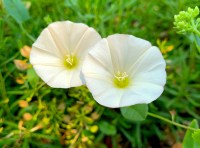
Bindweed is an invasive perennial plant that can spread its roots several meters into the soil, depriving nearby crops and flowers of essential water.
While it does have some beneficial uses—Native Americans used it to treat spider bites, fevers, and wounds, and Europeans used it as a laxative—bindweed primarily behaves selfishly and excessively, much like human selfishness.
Selfishness is the greatest curse of the human race.
Martin Luther King, Jr.
Bindweeds and Selfishness
Bindweed extends in all directions, attempting to envelop everything in its path. Similarly, selfishness has permeated every level of society, from family dynamics to the highest levels of social structure.
It grows by entwining and smothering other plants with its tendrils in a relentless pursuit to reach the top. The ego operates similarly, using various deceptive tactics, or what I refer to as “weapons of fear” (as described in my book Garden of Love) to control and manipulate everything according to its desires. It tramples over anything in its path, employing lies, betrayal, reproach, corruption, injustice, indifference, and violence, all in pursuit of power and dominance.
Bindweed entices us with the pleasant fragrance of its flowers, much like how selfishness lures us with material possessions and enticing offers.
Attempting to uproot bindweed reveals that, despite its delicate stem, its roots are remarkably strong and deeply embedded. Similarly, selfishness is deeply ingrained in our DNA, collective traumas, and memories, compounded by personal experiences.
Reducing the Bindweed of Selfishness
It is often tragic to see how transparently a man destroys his own life and that of others, being for nothing in the world able to understand to what extent all the tragedy originates from himself and to what extent it is fueled and maintained by him.
Carl Jung
If you want to really remove the weed, you will need to use persistence and dedication. In the same way, reducing selfishness requires lasting inner work with our pains, traumas, and negative emotions.
The root system of bindweed can be so extensive that herbicide applications are insufficient to eradicate the entire system. Likewise, eliminating selfishness requires more than just acknowledging how it hurts, disturbs, or affects us; we must also accept its presence and strive to find our equilibrium, seeking simplicity and embracing our inherent value.
Photo by Leslie Saunders on Unsplash
 In a Love World